Back to Fish Guide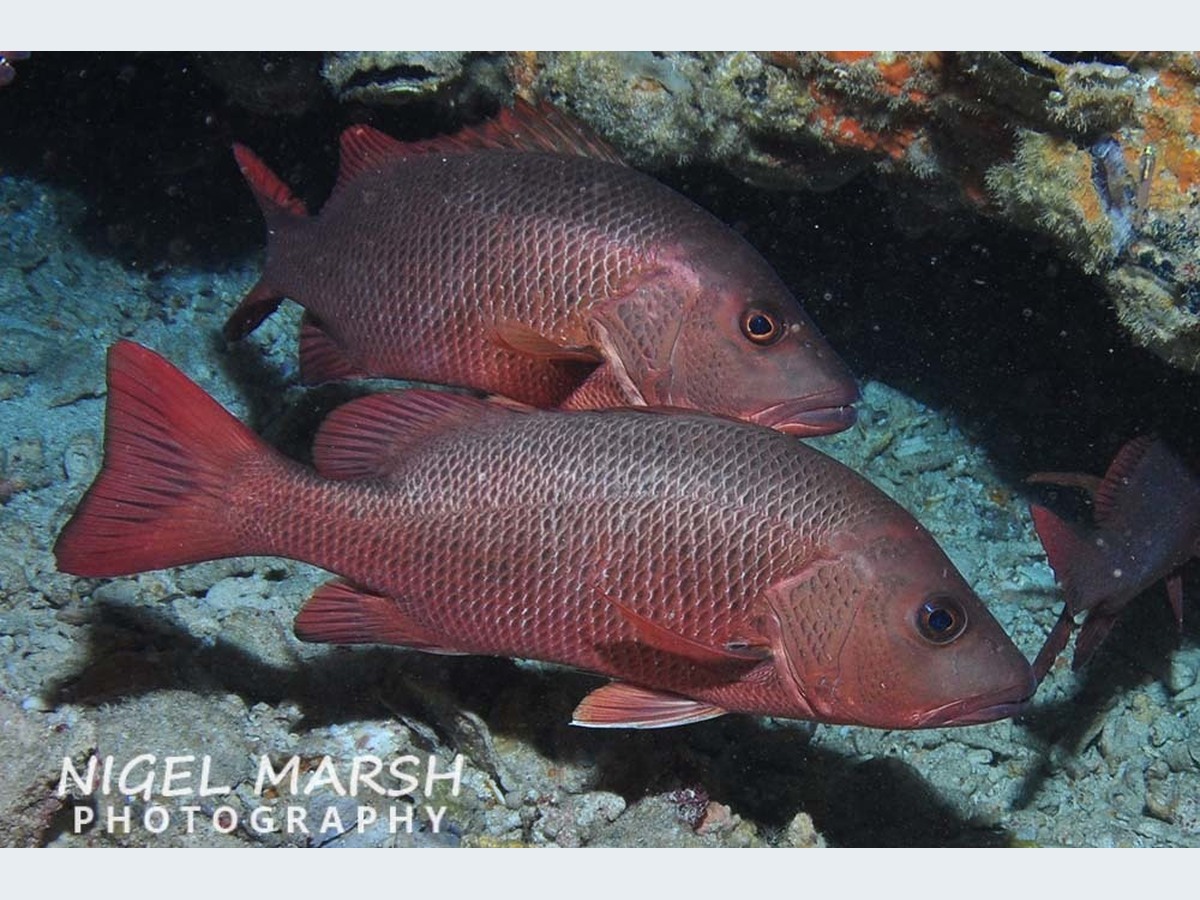 Reef
Nigel Marsh, CC BY-NC (https://creativecommons.org/licenses/by-nc/4.0/) - https://www.inaturalist.org/photos/42950611
Mangrove Jack
Lutjanus argentimaculatus
Also known as: Red Bream, Jack, Creek Red Bream
About this fish
Description▾
The Mangrove Jack is a member of the Lutjanidae (snapper) family, a powerful, aggressive predator known for its bronze-red colouration and explosive strikes. Found throughout the Indo-Pacific from East Africa to the western Pacific, it inhabits a wide range of environments from estuaries to offshore reefs across its lifecycle. It is one of the most popular sport fish in PNG due to its hard fighting nature and excellent eating quality.
Identification▾
Adults are typically reddish-bronze to dark copper with slightly darker fins and a robust, deep body. Juveniles are often paler with faint white vertical bars that fade with age. Commonly confused with the Red Bass (Lutjanus bohar), but Mangrove Jack have more pointed canine teeth, a deeper body profile, and lack the dark colouration on the inner pectoral fin base.
Habitat▾
In PNG, juveniles and sub-adults are found in mangrove-lined estuaries, tidal creeks, and river mouths, sheltering among submerged roots, fallen timber, and rock bars. Adults migrate to offshore reef systems where they inhabit caves, overhangs, and deep ledges at depths of 10 to 100 metres. Reef passages with strong tidal flow are particularly productive.
Best season & conditions▾
Catchable year-round in PNG, with peak activity in estuaries during the wet season from December to April when flooding rivers push bait downstream. Offshore reef populations are best targeted during the calmer months from May to November. They feed most aggressively during the run-out tide and around dawn and dusk.
Techniques, baits & lures▾
In estuaries, cast hard-bodied lures, soft plastics, or live bait tight to structure. Use heavy leaders of 30 to 50 lb fluorocarbon as Mangrove Jack will immediately head for cover when hooked. On reefs, deep jigging with metal jigs or slow-pitch jigs works well. Lock your drag and be prepared for brutal initial runs into structure.
Size range▾
Commonly caught between 30 and 60 cm and 1 to 5 kg. Maximum recorded size is approximately 120 cm and 16 kg, though fish over 8 kg are exceptional and usually taken on offshore reefs.
Handling & conservation▾
Listed as Least Concern by the IUCN. Mangrove habitats critical to juvenile recruitment are under pressure from coastal development. Handle with wet hands and support the fish horizontally for photos. Release large breeding fish over 60 cm to maintain healthy reef populations.
AI-generated guidance. Verify details with experienced anglers before relying on it.